
What Invisalign Can Fix: Crowding, Gaps and Bite Problems
Updated September 28, 2026 · Richmond Virginia Orthodontics, Short Pump & Midlothian, VA
Invisalign can fix far more than a slightly crooked front tooth. At Richmond Virginia Orthodontics, we use Invisalign clear aligners to treat crowded teeth, gaps, overbites, underbites, crossbites and open bites for teens and adults. Most mild to moderate cases, and many complex ones, respond well when an orthodontist plans every movement.
Key Takeaways
- Invisalign treats crowded teeth, gaps, overbites, underbites, crossbites and open bites for teens and adults.
- Aligners are worn 20 to 22 hours a day and changed every one to two weeks. Attachments and elastics make bite corrections possible.
- Most patients finish in about 12 to 18 months. Mild cases can take as little as six months.
- Severe skeletal bite problems may be better treated with braces, and an orthodontist exam tells you which is right.
If you’ve been hiding your smile in photos, this guide explains how Invisalign works, which problems it handles best and what treatment looks like at our Short Pump and Midlothian offices.
How Does Invisalign Work?

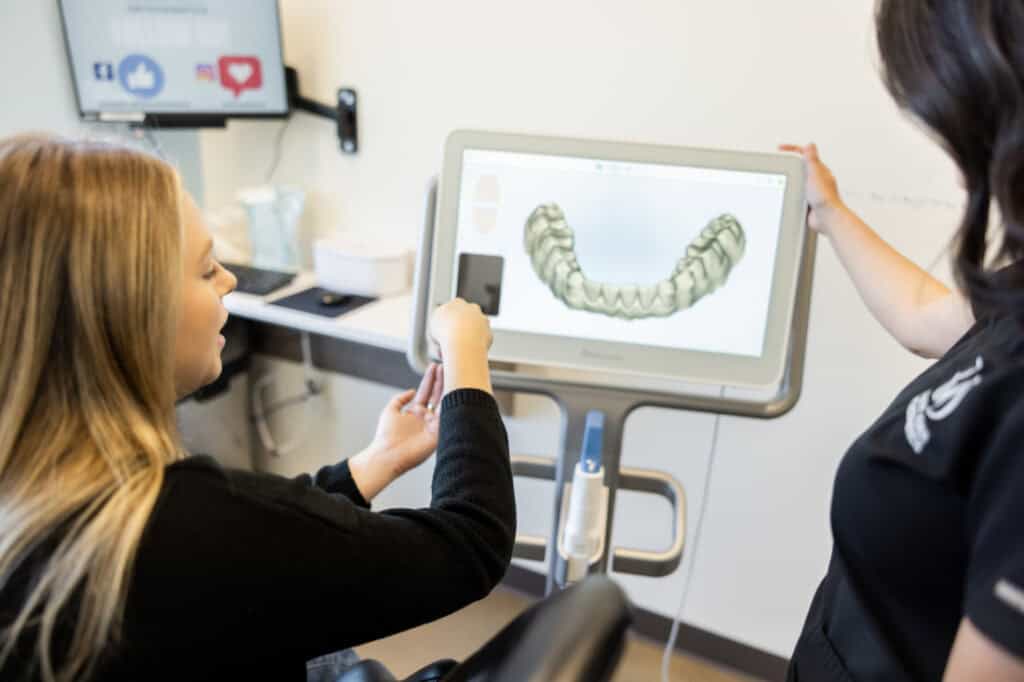
Invisalign uses a series of custom, clear, removable aligners to move your teeth a little at a time. We start with a 3D digital scan of your teeth. From that scan, we plan each stage of movement, and your aligners are made to match. Every new set applies gentle, targeted pressure to the teeth that need to move next.
You wear your aligners 20 to 22 hours a day and switch to a new set every one to two weeks. Small tooth-colored bumps called attachments help the aligners grip specific teeth, so we can rotate, raise or tip them precisely. That’s what lets Invisalign handle bite problems, not just cosmetic straightening.
Why patients like it
- Nearly invisible: most people won’t notice you’re wearing them.
- Removable: take them out to eat, brush and floss.
- Comfortable: smooth plastic, with no brackets or wires rubbing your cheeks.
- Predictable: you see a digital preview of your planned result before you start.
Wondering if Invisalign can fix your smile?
We’ll examine your teeth and bite and tell you honestly whether aligners are the right fit.
Book Your New Patient ExamWhat Dental Issues Can Invisalign Treat?
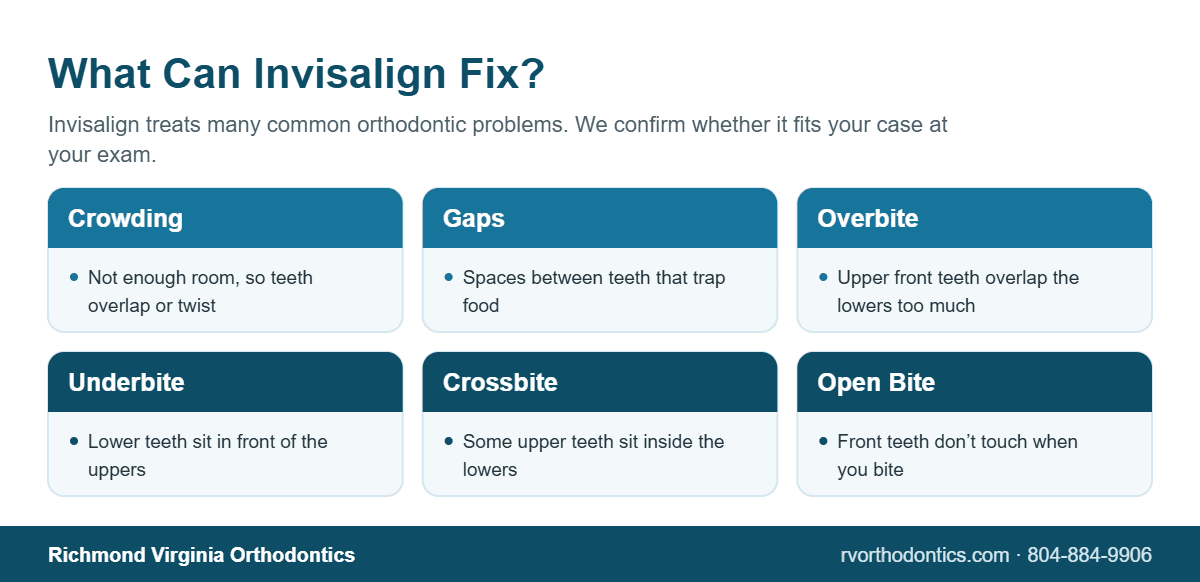
Six common problems Invisalign can treat.
Here are the six problems we treat most often with Invisalign, and how the aligners fix each one.
Crowded teeth
Crowding happens when your jaw doesn’t have enough room for all your teeth, so they overlap, twist or bunch together. Crowded teeth are harder to clean, which raises your risk of cavities and gum problems. Invisalign creates space and moves each tooth into line. Sometimes we gently widen the arch, and sometimes we slightly reshape the sides of a few teeth.
Gaps between teeth
Spaces between teeth (called diastemas) can come from a mismatch between tooth size and jaw size, from thumb sucking or from tongue thrusting. Gaps trap food and can affect how your gums look. Invisalign closes gaps by moving the teeth toward each other in small, controlled steps.
Overbite
With an overbite, the upper front teeth overlap the lower front teeth too much. A deep overbite can wear down your lower teeth and strain your jaw. We correct it by leveling the teeth and, when needed, using small elastics with your aligners to bring your bite into balance.
Underbite
An underbite means your lower front teeth sit in front of your upper teeth. It can make chewing and some sounds harder, and it wears teeth unevenly. Many mild to moderate underbites respond well to Invisalign with elastics. Severe underbites caused by jaw size may need other treatment, and we’ll tell you honestly at your exam.
Crossbite
In a crossbite, some upper teeth sit inside the lower teeth when you bite down. Left alone, it can cause uneven wear, gum recession and jaw asymmetry. Invisalign moves the affected teeth outward or inward so your upper and lower teeth meet correctly.
Open bite
With an open bite, your front teeth don’t touch when your back teeth are together. It often comes from long-term thumb sucking or tongue thrusting, and it can affect chewing and speech. Invisalign can close many open bites by moving the front teeth into contact.
When Invisalign May Not Be the Best Fit
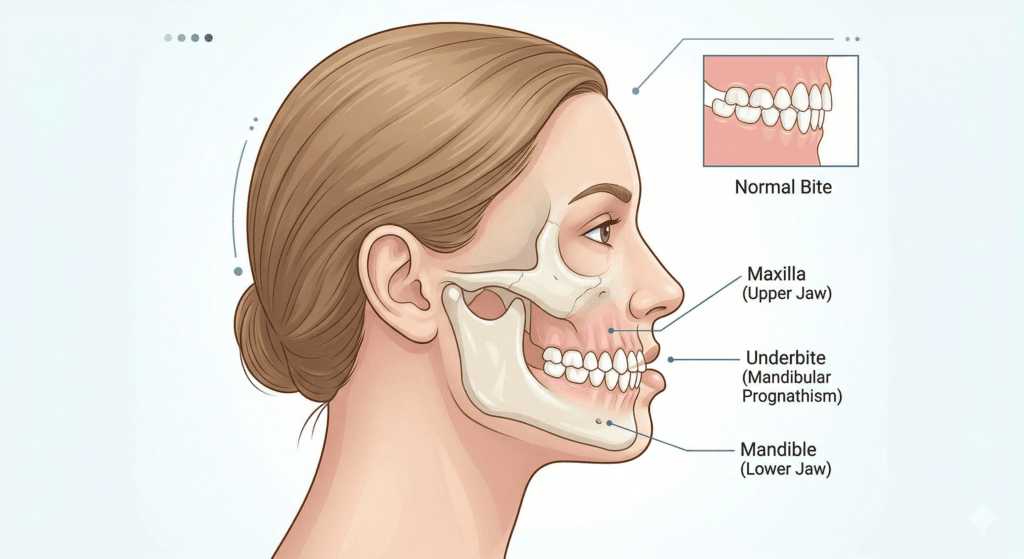
Invisalign is powerful, but it isn’t right for every case. Braces may work better if you have a severe skeletal bite problem, teeth that need large vertical movements, or trouble wearing aligners consistently. Some younger children also do better with braces or early treatment appliances. Our goal is the best result for you, so if braces will get you there faster or more reliably, we’ll say so. Compare the two in our guide on Invisalign vs. braces.
See your new smile before you start
Your new patient exam includes a 3D scan and a preview of your planned results.
Book Your New Patient ExamWhat Invisalign Treatment Looks Like at RVO
1. New patient exam
We talk about your goals, examine your teeth and bite and take the digital images we need. You’ll learn whether Invisalign is a good fit, how long it should take and what it costs.
2. 3D scan and custom plan
A quick digital scan replaces messy impressions. Dr. Schanilec or Dr. Gladwell maps every stage of your tooth movement, and you see a preview of your new smile.
3. Aligner fitting
We fit your first aligners, place any attachments and show you how to wear, clean and store them.
4. Progress checks
You’ll switch aligners every one to two weeks and visit us every six to eight weeks so we can keep your treatment on track.
5. Retainers
When your teeth reach their final position, you’ll wear retainers to keep them there. This step protects the smile you worked for.
How Long Does Invisalign Take?
Mild crowding or spacing can take as little as six months. Most of our patients finish in about 12 to 18 months, and complex bite corrections can take longer. The biggest factor you control is wear time. Patients who keep their aligners in 20 to 22 hours a day finish on schedule far more often. See our tips on the best time to start Invisalign.
Why Choose Richmond Virginia Orthodontics for Invisalign
Richmond Magazine readers voted us the #1 orthodontist in Richmond. Our orthodontists, Dr. Chad Schanilec and Dr. Jason Gladwell, both trained in orthodontics at VCU/MCV. We plan every Invisalign case in-house and see you in person throughout treatment, which is something mail-order aligners can’t offer. We also work with many dental insurance plans that include orthodontic benefits, and we’ll help you understand your coverage.
Invisalign FAQs

Can Invisalign fix an overbite or underbite?
Yes, in many cases. Invisalign combined with small elastics can correct many mild to moderate overbites and underbites. Severe jaw-related bite problems may need braces or other treatment.
How many hours a day do I need to wear Invisalign?
Wear your aligners 20 to 22 hours a day. Take them out only to eat, drink anything besides water, brush and floss.
Does Invisalign work for teens?
Yes. Invisalign Teen works well for responsible teens and includes wear indicators that show whether the aligners are being worn enough.
Is Invisalign more expensive than braces?
Costs are often similar, and they depend on how complex your case is. We give you a clear treatment fee at your exam, and many insurance plans with orthodontic benefits apply to Invisalign.
Find Out What Invisalign Can Do for You
The fastest way to know whether Invisalign can fix your smile is an exam with an orthodontist. Call 804-884-9906 or use the form on this page to book at our Short Pump office or our Midlothian office.
Ready to start Invisalign?
Book your new patient exam at our Short Pump or Midlothian office.
Book Your New Patient Exam