
A Parent’s Guide to Orthodontics for Children in Richmond
Updated September 28, 2026 · Richmond Virginia Orthodontics, Short Pump & Midlothian, VA
Most kids should have their first orthodontic check by age 7. That’s the American Association of Orthodontists’ recommendation, and it’s not because most 7-year-olds need braces. They don’t. An early visit lets us spot bite and jaw problems while your child is still growing, when some issues are easiest to guide and correct.
Key Takeaways
- The American Association of Orthodontists recommends a child’s first orthodontic check by age 7.
- Most children only need monitoring at first. Some benefit from early treatment with expanders or space maintainers.
- Most kids who need full braces or Invisalign Teen start between ages 10 and 14.
- Watch for crowding, crossbites, protruding teeth, early or late tooth loss and thumb sucking after age 4.
At Richmond Virginia Orthodontics, we see children, teens and parents every day at our Short Pump and Midlothian offices. This guide covers what every parent should know: when to come in, the signs to watch for, treatment options and how to help your child feel confident about it.
When Should Your Child First See an Orthodontist?
 A typical orthodontic timeline for kids.
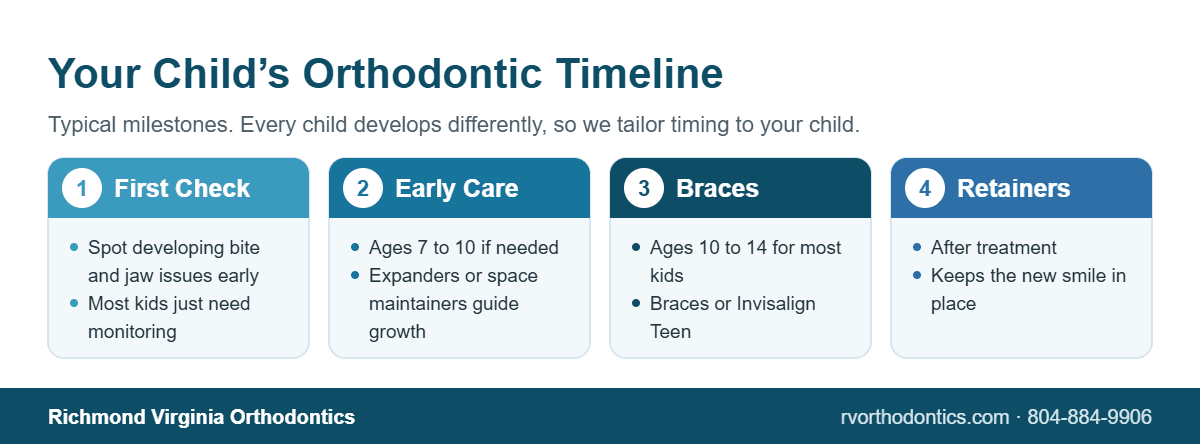 A typical orthodontic timeline for kids.
By age 7, most kids have a mix of baby teeth and adult teeth, including their first permanent molars and front teeth. That’s enough for us to see how the bite and jaws are developing. We can spot crowding, crossbites, protruding front teeth and habits that are shaping the mouth.
Here’s what usually happens after that first visit:
- Most children: no treatment yet. We monitor growth with periodic checks until the right time.
- Some children: a short phase of early treatment to guide jaw growth or make room for adult teeth.
- Later, around ages 10 to 14: full braces or Invisalign Teen if needed, once most adult teeth are in.
Is your child 7 or older?
Book their first orthodontic check. Most kids just need monitoring, and we’ll tell you if and when treatment makes sense.
Signs Your Child May Need Orthodontic Care
 Signs it’s time for an orthodontic check.
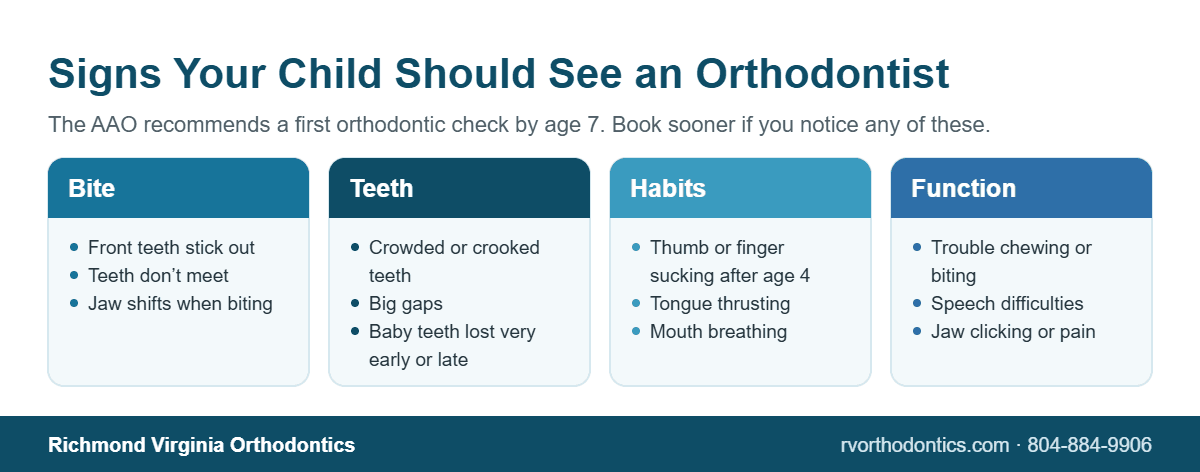 Signs it’s time for an orthodontic check.
Don’t wait until age 7 if you notice any of these:
- Crowded, overlapping or crooked teeth
- Front teeth that stick out or don’t meet
- Upper teeth that sit inside the lower teeth (crossbite)
- Baby teeth lost very early or very late
- Thumb or finger sucking after about age 4
- Trouble chewing, biting or speaking clearly
- Mouth breathing or a jaw that shifts, clicks or hurts
Common Orthodontic Problems in Children
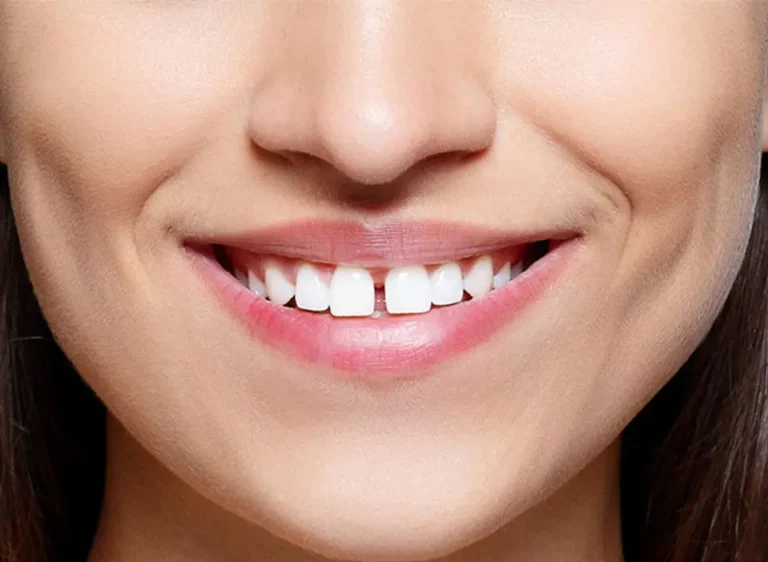
Crowding
When there isn’t enough room for adult teeth, they come in overlapped or twisted. Crowded teeth are harder to clean, which raises the risk of cavities and gum problems.
Overbite and overjet
Upper front teeth that overlap the lowers too much, or stick out, are more likely to chip in a fall or on the playground. They can also affect how your child feels about their smile.
Underbite
When lower teeth sit in front of the upper teeth, jaw growth is often involved. Early treatment can make a real difference here.
Crossbite
Some upper teeth bite inside the lower teeth. A crossbite can push the jaw to one side as it grows, so we often treat it early.
Open bite
The front teeth don’t touch when the back teeth are together. Thumb sucking and tongue thrusting are common causes.
Left untreated, these problems can lead to uneven tooth wear, jaw strain, speech difficulties and more complex treatment later.
Orthodontic Treatment Options for Children
Early (Phase 1) treatment
For kids who need it, usually between ages 7 and 10, early treatment uses appliances like palatal expanders to widen a narrow upper jaw or space maintainers to hold room for adult teeth. The goal is to guide growth now so later treatment is shorter and simpler.
Traditional braces
Metal braces remain the most versatile option for kids and teens. They work around the clock, handle nearly any case, and kids enjoy choosing colored bands. Learn more about braces in Richmond.
Clear braces
Tooth-colored ceramic brackets are a good fit for older kids and teens who want a more discreet look.
Invisalign Teen
Clear, removable aligners work well for responsible teens who will wear them 20 to 22 hours a day. Invisalign Teen includes wear indicators so parents and our team can check that the aligners are being worn enough. Compare the options in Invisalign vs. braces.
Retainers
After treatment, retainers keep teeth in their new positions. They’re the most important part of keeping your investment.
Get a clear plan for your child
We explain every option, the right timing and the cost, with no pressure.
How to Prepare Your Child for Treatment
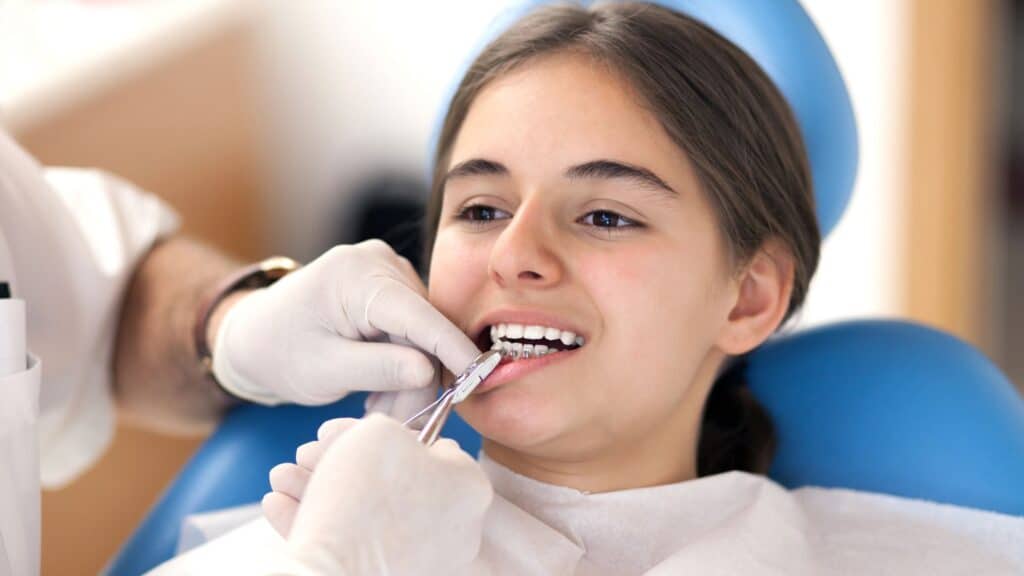
- Keep it simple and positive. Explain that the orthodontist helps teeth line up so they work better and are easier to clean.
- Visit together. A first appointment with no treatment helps your child get comfortable with our team and office.
- Be honest about soreness. Teeth may feel tender for a few days after braces go on or get adjusted. Soft foods and orthodontic wax help.
- Practice brushing and flossing. Good habits before treatment make cleaning around braces much easier.
- Stock up. Keep soft foods, a soft-bristled toothbrush, floss threaders and orthodontic wax at home.
- Celebrate milestones. Mark progress, like a new wire or halfway point, to keep your child motivated.
Pediatric Orthodontic Care at Richmond Virginia Orthodontics
Richmond Magazine readers voted us the #1 orthodontist in Richmond. Our orthodontists, Dr. Chad Schanilec and Dr. Jason Gladwell, both trained in orthodontics at VCU/MCV and have years of experience treating kids and teens. We keep visits relaxed and friendly, explain every step in kid-friendly terms and help parents understand timing, options and cost.
We work with many dental insurance plans that include orthodontic benefits, and our team will help you understand your coverage. Our offices open as early as 7 a.m. on Wednesdays and stay open until 6 p.m. on Mondays, so it’s easier to fit visits around school.
Orthodontics for Children FAQs
What age should my child first see an orthodontist?
By age 7, as recommended by the American Association of Orthodontists. Come in sooner if you notice crowding, a crossbite, protruding teeth or a thumb-sucking habit.
Does my child need early treatment?
Most children don’t. We only recommend early treatment when it will make a clear difference, such as guiding jaw growth or correcting a crossbite.
How long do kids wear braces?
Most kids wear braces for about 12 to 30 months, depending on how much their teeth and bite need to move.
Can my child get Invisalign instead of braces?
Many teens can. Younger children who may not wear aligners consistently usually do better with braces. We’ll recommend what fits your child.
Schedule Your Child’s First Orthodontic Visit
Whether your child is 7 and due for a first check or a teen ready for braces, we’re here to help. Call 804-884-9906 or use the form on this page to book at our Short Pump office or our Midlothian office.
Schedule your child’s first visit
Book a new patient exam at our Short Pump or Midlothian office.