
Can Braces Cause Gum Disease? How to Protect Your Gums
Updated September 28, 2026 · Richmond Virginia Orthodontics, Short Pump & Midlothian, VA
The short answer: metal braces don’t cause gum disease on their own. Brackets and wires do make plaque easier to trap and harder to remove. When plaque sits along the gumline long enough, it can inflame the gums (gingivitis) and, if it isn’t treated, lead to more serious gum disease. The good news is that the right daily routine can prevent almost all of it.
Key Takeaways
- Metal braces don’t cause gum disease on their own. Plaque trapped around brackets and wires does.
- The most common problem is gingivitis (red, puffy, bleeding gums), which is reversible with better brushing and flossing.
- Brush after meals, floss daily with a threader, interdental brush or water flosser, rinse before bed and keep your regular dental cleanings.
- Adults with a history of gum disease can often still have orthodontic treatment once their gums are stable.
We hear this question often at Richmond Virginia Orthodontics, usually from parents whose child just got braces, or from adults who want to straighten their teeth but are worried about their gum health. Below, we explain what actually happens to your gums with braces, what warning signs to watch for and the routine we recommend to our own patients.
Why Braces Can Lead to Gum Problems
 How plaque around braces can progress from healthy gums to gum disease.
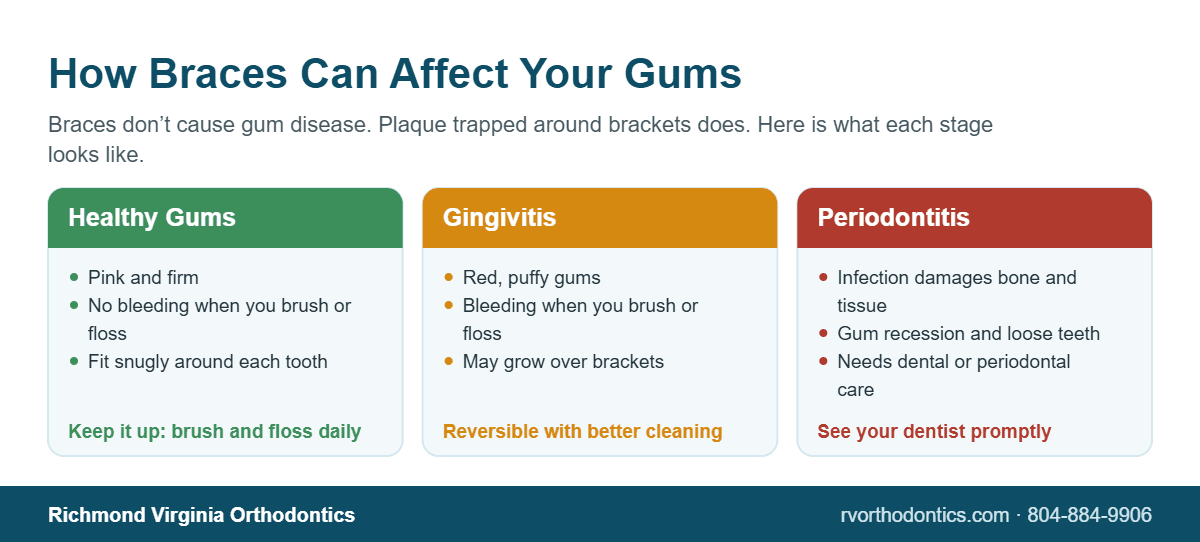 How plaque around braces can progress from healthy gums to gum disease.
Every bracket and wire adds a small ledge where food and bacteria can collect. Plaque is the sticky film that forms on your teeth every day. Normally, brushing and flossing wipe it away. With braces, your toothbrush has to get around hardware, and regular floss can’t slide down between your teeth as easily. If plaque stays along the gums, it irritates them.
That irritation can show up in a few different ways:
- Gingivitis: red, puffy gums that bleed when you brush or floss. This is the earliest stage of gum disease, and it’s completely reversible.
- Gum overgrowth (gingival enlargement): gums that look swollen or seem to grow over the brackets. This is usually caused by plaque-related inflammation, and it typically improves with better cleaning.
- Periodontitis: an advanced stage in which the infection damages the bone and tissue that hold your teeth in place. This is uncommon in healthy teens who keep their teeth clean, but adults with a history of gum problems need to be especially careful.
Your gum health matters for your treatment, too. Healthy gums and bone give your teeth a stable base to move through. Inflamed gums can slow treatment and make results harder to maintain.
Signs Your Gums Need Attention
Contact us or your dentist if you notice any of these while you’re in braces:
- Gums that bleed most times you brush or floss
- Swollen, shiny or dark red gum tissue
- Gums that cover part of a bracket
- Bad breath that doesn’t go away
- Tenderness along the gumline
- White, chalky spots on your teeth near the brackets, which are early signs of enamel damage from plaque
Seeing a little bleeding in the first week or two after your braces go on is common while your gums adjust and you figure out a new brushing routine. If it keeps going after that, it’s a sign that plaque is winning.
Worried about your gums during braces?
We’ll check your gum health and build a cleaning plan that works with your braces.
How to Prevent Gum Disease With Braces
 The five-step gum care routine we teach our braces patients.
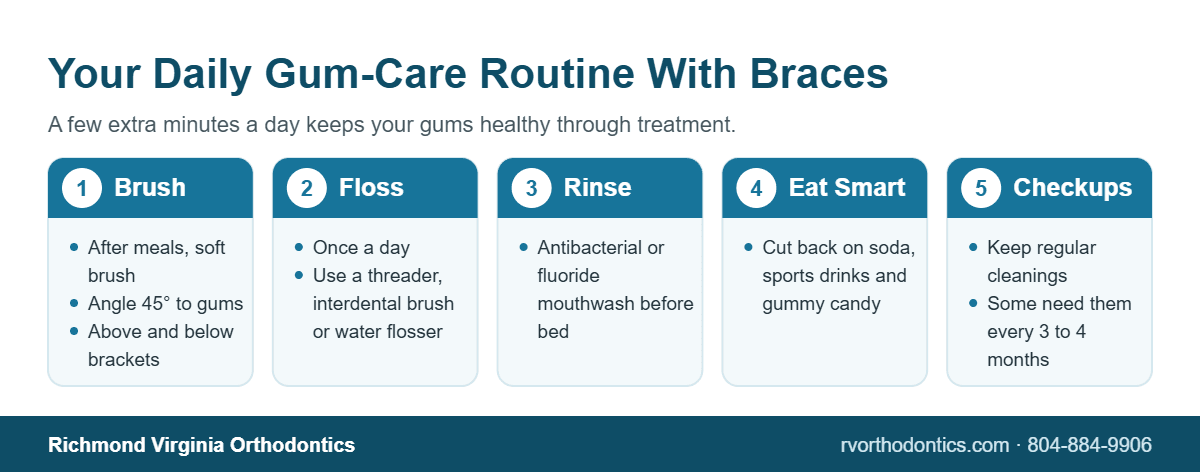 The five-step gum care routine we teach our braces patients.
This is the routine we teach our patients. It takes a few extra minutes a day, and it makes a big difference for your gums.
1. Brush after every meal
Aim to brush at least twice a day, and ideally after every meal and snack. Use a soft-bristled toothbrush and fluoride toothpaste. Angle the bristles toward your gumline at about 45 degrees, then brush above and below each bracket. An electric toothbrush with a small round head makes this much easier for many patients.
2. Floss every day, even though it’s harder
This is the step most people skip, and it’s the one your gums need most. Some tools that help:
- Floss threaders or braces floss with a stiff end that slides under the wire
- Interdental brushes (tiny “Christmas tree” brushes) that clean around brackets and under wires
- Water flossers, which flush out debris and are great for kids and teens who struggle with string floss
Ask us at your next visit, and we’ll show you how to use any of these.
3. Rinse before bed
An antibacterial or fluoride mouthwash before bed reduces bacteria and helps protect your enamel overnight. It isn’t a replacement for brushing and flossing, but it’s a good last step.
4. Watch what you eat
Sugary drinks, sticky candy and starchy snacks feed plaque bacteria. They also cling to brackets. Cutting back on soda, sports drinks and gummy candy protects your gums, and it protects your brackets too. See our list of foods to avoid with braces.
5. Keep your regular dental cleanings
Wearing braces doesn’t mean you stop seeing your dentist. Keep up with your cleanings and checkups. Some patients benefit from cleanings every three to four months during orthodontic treatment. We work closely with local dentists to keep your whole mouth healthy.
What If You Already Have Gum Disease?
Adults with a history of gum disease can often still get orthodontic treatment. In fact, straighter teeth are easier to keep clean, which can support better gum health in the long run. The key is to get the gum disease under control before we start moving teeth. Before your treatment begins, we may ask your dentist or periodontist to confirm that your gums are stable, and we’ll monitor them closely along the way.
Have a history of gum problems?
Ask us whether braces or Invisalign is the healthier choice for your smile.
Are Clear Aligners Better for Your Gums?

For some patients, they can be. Invisalign aligners come out when you eat and brush, so you can clean your teeth normally, with no brackets in the way. They’re a good option for adults with a history of gum problems, or for anyone who knows flossing around wires won’t happen consistently. Aligners aren’t right for every case, and they only work if you wear them 20 to 22 hours a day. We’ll help you weigh the pros and cons during your exam.
Frequently Asked Questions
Is it normal for gums to bleed with braces?
A little bleeding in the first couple of weeks is common. Bleeding that lasts longer than that usually means plaque is building up along the gumline. Step up your brushing and flossing, and let us know if it doesn’t get better.
Will swollen gums go away after braces come off?
In most cases, yes. Once the brackets are gone and cleaning gets easier, swollen gums usually shrink back within a few weeks to a few months. Occasionally, overgrown tissue needs treatment from a dentist or periodontist.
Can braces cause receding gums?
Braces are not a common cause of gum recession when your gums are healthy and your teeth move within the supporting bone. Recession is more likely with thin gum tissue, aggressive brushing or untreated gum disease. We check for these risks before and during your treatment.
How often should I brush with braces?
Brush at least twice a day, and ideally after every meal. Floss once a day with a threader, interdental brush or water flosser.
Have Questions About Braces and Your Gums?

If you’re worried about how braces might affect your gums, or you’re seeing signs of irritation during treatment, we’re here to help. Dr. Schanilec and Dr. Gladwell will look at your gum health, answer your questions and recommend the right treatment for you. Call 804-884-9906 or use the form on this page to request an appointment at our Short Pump or Midlothian office.
Get answers about braces and your gums
Book your new patient exam at our Short Pump or Midlothian office.