
Teeth Grinding and Invisalign: What You Need to Know
Updated September 28, 2026 · Richmond Virginia Orthodontics, Short Pump & Midlothian, VA
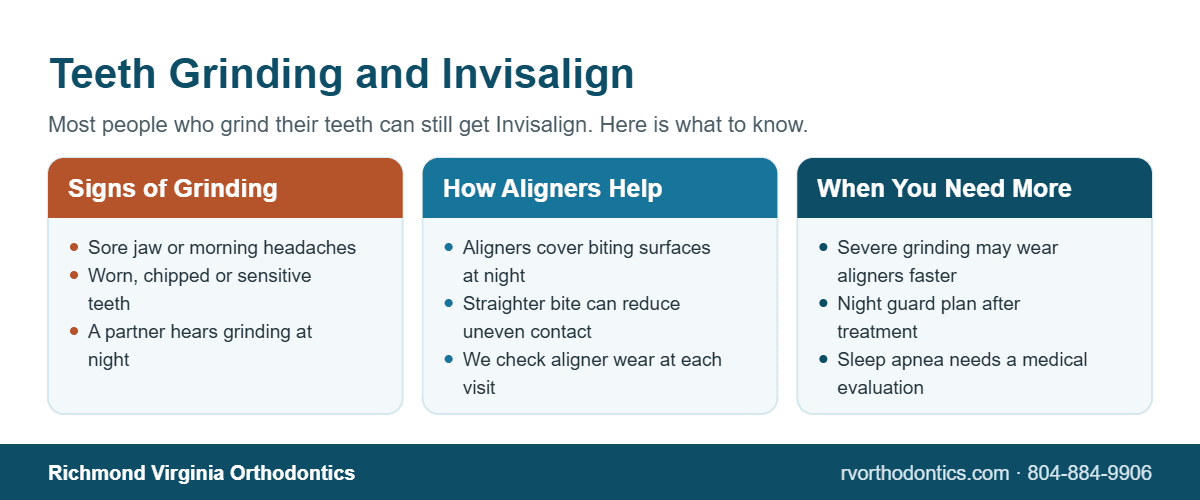
Yes, most people who grind their teeth at night can still get Invisalign. The aligners cover the biting surfaces of your teeth, so they add a thin layer of protection while you sleep. For some people, straightening the bite also reduces the uneven contact that contributes to grinding. Heavy grinders may wear through aligners faster. If your grinding is linked to sleep apnea or causes jaw pain, you’ll need a plan that addresses that too.
Key Takeaways
- Most people who grind their teeth at night can still get Invisalign.
- Aligners cover the biting surfaces and add a protective layer while you sleep.
- A night guard usually is not worn at the same time as aligners. Your aligners protect you during treatment.
- Heavy grinding, jaw pain or signs of sleep apnea need extra evaluation.
At Richmond Virginia Orthodontics, we treat many adults who clench or grind (called bruxism). Here’s how teeth grinding and Invisalign work together, and when you may need extra support.
What Is Teeth Grinding (Bruxism)?

Bruxism is clenching or grinding your teeth, often during sleep and usually without realizing it. Studies suggest roughly 1 in 10 adults grind their teeth at night. Common triggers include stress, sleep apnea and other sleep-disordered breathing, acid reflux, caffeine or alcohol and some medications. A misaligned bite can also play a role.
Signs you may be grinding
- A sore jaw or tired face muscles when you wake up
- Morning headaches, especially at the temples
- Worn, flattened, chipped or sensitive teeth
- Clicking or discomfort in your jaw joint
- A partner who hears grinding at night
Over time, grinding can wear down enamel, crack teeth and damage fillings and crowns, so it’s worth addressing.
Grind your teeth and want straighter teeth?
Book a new patient exam and we’ll check your bite and jaw and tell you if Invisalign is a fit.
Can You Get Invisalign if You Grind Your Teeth?
In most cases, yes. We’ll examine your teeth, bite and jaw joints to make sure Invisalign is a safe fit. Here’s why aligners often work well for grinders:
- A protective layer: aligners cover the chewing surfaces, so your teeth grind against plastic instead of each other.
- A better bite: correcting crowding, crossbites or deep bites can create more even contact between your upper and lower teeth.
- Frequent replacement: you switch to fresh aligners every one to two weeks, so normal wear usually isn’t a problem.
Can You Wear a Night Guard With Invisalign?

How Invisalign and teeth grinding work together.
Usually not at the same time. Your aligners need to be worn 20 to 22 hours a day, including overnight, and a night guard won’t fit over them. For most patients, the aligners themselves provide protection at night. If you already wear a night guard, bring it to your exam. We’ll plan how to protect your teeth during treatment and afterward, when a retainer or new night guard can take over.
Protect your teeth while you straighten them
We plan Invisalign around your grinding habits from day one.
When Grinding Needs Extra Attention
- Heavy grinding: if you wear holes through your aligners quickly, we can adjust your plan.
- Jaw pain or TMJ symptoms: we’ll evaluate your jaw joints and coordinate care if needed.
- Snoring or daytime sleepiness: these can signal sleep apnea, which needs a medical evaluation.
- Cracked teeth or broken dental work: your dentist may need to repair teeth before or during treatment.
Tips for Invisalign Patients Who Grind
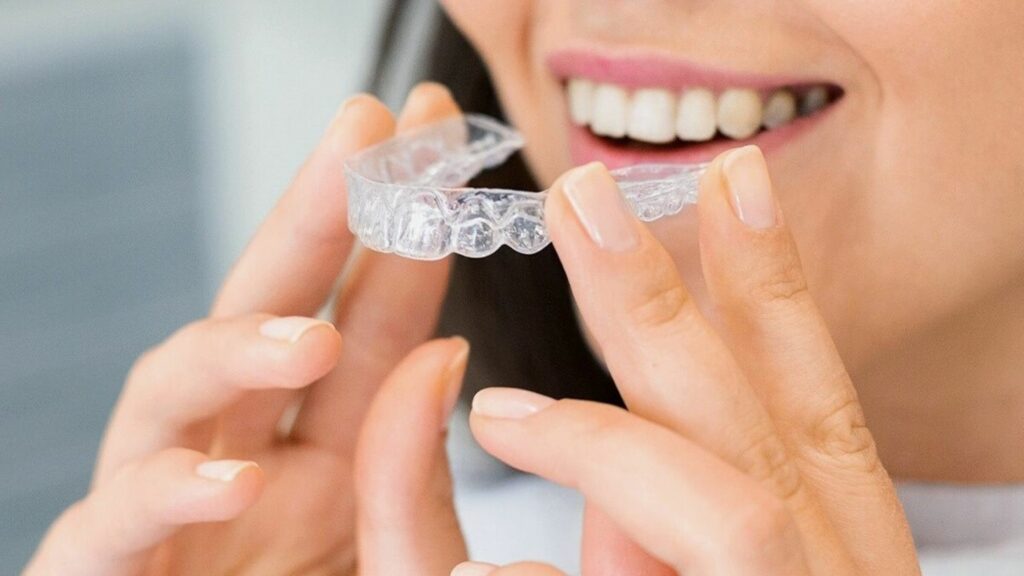
- Wear your aligners every night, since that’s when they protect your teeth.
- Check your aligners for thin spots, cracks or holes, and tell us if you see damage.
- Keep your previous set as a backup.
- Cut back on caffeine and alcohol in the evening.
- Try stress-reducing habits before bed.
- Wear your retainer or night guard after treatment to protect your results.
Teeth Grinding and Invisalign FAQs
Can I get Invisalign if I grind my teeth?
Usually, yes. Aligners cover the biting surfaces and add a layer of protection at night. We’ll evaluate your bite and jaw to make sure Invisalign is a good fit.
Will grinding damage my Invisalign aligners?
Mild wear is normal, and you switch to new aligners every one to two weeks. Heavy grinders may wear through aligners faster, so show us any damage.
Can Invisalign stop teeth grinding?
Invisalign isn’t a cure for bruxism, but a better-aligned bite may reduce grinding for some people, and the aligners protect teeth while you wear them.
Do I still need a night guard after Invisalign?
Many grinders do. Some retainers offer protection, and we may recommend a night guard to protect your teeth long term.
Straighten Your Smile, Even if You Grind

Don’t let grinding keep you from the smile you want. Call 804-884-9906 or use the form on this page to book at our Short Pump office or our Midlothian office. Learn more about Invisalign for adults.
Start Invisalign with confidence
Book your new patient exam at our Short Pump or Midlothian office.